
Why Independent Clothing Costs More: A Pricing Breakdown
Table of Contents
- Why Independent Clothing Costs More: The Real Factors
- Independent Clothing vs Fast Fashion: What Sets Them Apart
- How to Evaluate Clothing Quality and Price
- Understanding Small-Batch Clothing Production
- Is Independent Clothing Worth the Price?
- Frequently Asked Questions
Last Updated: October 5, 2026
Why Independent Clothing Costs More: The Real Factors
When you shop independent brands, you're paying more than you would at a big-box retailer. That's not a secret. But the reason why usually gets buried under vague talk about "quality" and "craftsmanship." The real story is more specific.
At Five Foot Fury Co., we design small-batch, print-on-demand apparel that reflects individuality. That model costs more to execute than churning out thousands of identical pieces on a factory line. Understanding why helps you decide whether independent clothing is worth the price for you.
The core issue: independent clothing operates at a fundamentally different scale than fast fashion. When you're making 50 shirts instead of 50,000, your per-unit costs behave completely differently.
Small Production Runs and Economies of Scale
Here's the math that changes everything: a factory making 50,000 units spreads its setup costs across 50,000 pieces. A small brand making 500 units spreads the same setup costs across 500 pieces. That's a 100-fold difference in per-unit burden, before you even cut a single garment.
Small production runs mean you lose economies of scale at every step:
- Setup and tooling costs don't decrease with smaller orders
- Minimum order quantities from fabric suppliers force you to buy more than you need
- Shipping and logistics cost more per unit when you're ordering small quantities
- Quality control requires the same labor whether you're checking 100 garments or 10,000
Fast fashion brands negotiate bulk pricing because they commit to massive volumes. Independent brands can't. A small brand might pay 40% more for the same fabric as a major retailer, simply because they're ordering a fraction of the quantity.
This isn't a flaw in independent production, it's just the reality of the math. When you buy from a brand making limited-run designs, you're helping cover costs that get split across millions of units at a mass production facility.
Materials, Fabric, and Trims
Independent brands often choose different materials than fast fashion, and those choices cost more upfront.
Small-batch production means you're more likely to source higher-quality fabric. A major retailer buying 100,000 meters of cotton jersey can negotiate a lower price on lower-grade material.
The same logic applies to trims, buttons, zippers, thread, labels, tags. Independent brands typically source these individually or in small quantities.
Material sourcing also reflects different priorities. Many independent brands emphasize durability, finish quality, and how fabric feels against skin. These choices add cost. A fast fashion brand optimizes for lowest cost and adequate performance.
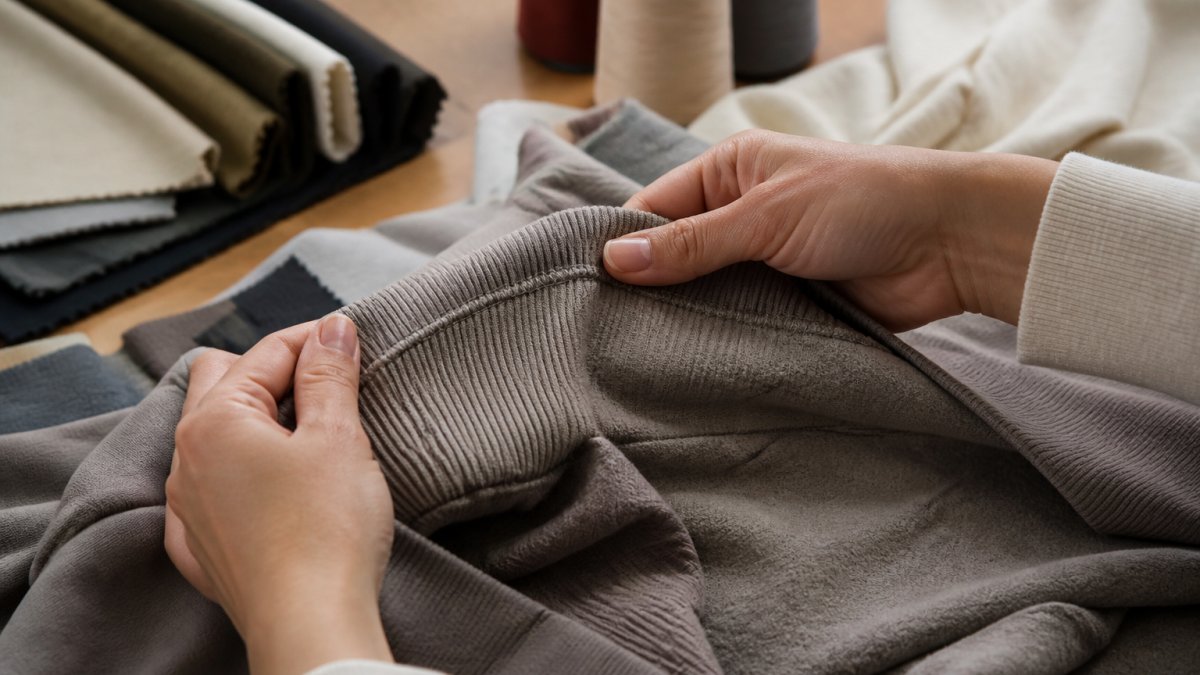
Design, Patternmaking, and Sampling
Before a single production garment is made, independent brands invest heavily in design and development. This cost gets spread across a small number of units.
Thoughtfully designed clothing requires:
- Design work: concept, sketching, mood boarding, iteration
- Patternmaking: creating the technical patterns that cut pieces fit together correctly
- Sampling: making prototypes to test fit, construction, and design details
- Revisions: adjusting based on how samples perform
A major retailer spreads these costs across thousands or millions of units. An independent brand spreads them across hundreds. If design and sampling costs $2,000 and you make 500 garments, that's $4 per unit.
Sampling is especially expensive for small brands. Each prototype uses real materials and labor. You might make 5-10 samples before you're happy with fit and construction. That's real cost with no revenue attached until production runs.
Independent brands also tend to invest more in patternmaking precision. Fit matters more when customers are buying directly from you and expecting quality.
Labor and Skilled Garment Construction
This is where independent and fast fashion diverge most dramatically.
Fast fashion prioritizes speed and volume. Garments are designed for rapid production on automated lines. Labor is minimized through simplified construction. Seams are basic. Finishes are functional but not refined.
Independent brands often prioritize construction quality. That means:
- Skilled labor for specialized techniques (hand-finished seams, reinforced stress points, precise hemming)
- Slower production that allows for quality control at multiple stages
- Better finishing details like bound seams, French seams, or reinforced hems
- Attention to construction that prevents early failure
Skilled garment construction costs more because it requires more labor time and worker expertise. A simple flat-felled seam takes longer than a basic stitch. Hand-finished details require trained hands. Quality control requires workers checking garments at multiple stages.
Independent brands also tend to produce in facilities that pay fair wages and maintain reasonable working conditions. That costs more than outsourcing to the cheapest available labor market. Many small brands see this as non-negotiable, part of what makes the product worth buying.
Independent Clothing vs Fast Fashion: What Sets Them Apart
The difference between independent clothing and fast fashion isn't just price. It's a fundamentally different approach to how clothing gets made.
Fast fashion optimizes for cost, speed, and volume. The goal is to move inventory quickly and maximize throughput.
Independent clothing optimizes for longevity, fit, and design intention. The goal is to create pieces people will wear repeatedly. Quality matters because the brand's reputation depends on it.
These aren't moral judgments, they're structural differences. Fast fashion works at massive scale because it accepts lower quality. Independent brands work at small scale because they prioritize quality.
The price difference reflects these choices. When you buy independent clothing, you're paying for:
- Smaller production runs with higher per-unit costs
- Better materials and components
- More design and development investment per garment
- Skilled labor and careful construction
- Fair wages and reasonable working conditions
- Inventory risk borne by the brand, not passed to retailers
Fast fashion passes many of these costs elsewhere, to retailers who absorb markdowns, to workers in low-wage markets, to the environment through rapid disposal.
How to Evaluate Clothing Quality and Price
Not all independent clothing is worth the price. Not all expensive garments are well-made. You need a way to evaluate whether a specific piece justifies its cost.
Assessing Durability and Craftsmanship
Start by examining the garment itself. Look for specific construction details that signal quality:
Seams and stitching:
- Are seams straight and consistent?
- Is the stitch length even?
- Are stress points (shoulders, armholes, crotch) reinforced?
- Do seams lie flat or pucker?
Hems and edges:
- Is the hem even and secure?
- Are raw edges finished or left exposed intentionally?
- Do edges show fraying or careful finishing?
Fabric and material:
- Does the fabric feel substantial or thin?
- Is the weave tight and even?
- Does it wrinkle excessively or hold its shape?
- Are there any loose threads or manufacturing defects?
Buttons, zippers, and hardware:
- Are buttons sewn securely with reinforced thread?
- Do zippers glide smoothly?
- Is hardware quality (weight, finish) consistent with the garment's price?
Fit and proportions:
- Do seams align properly at shoulders and side seams?
- Is the garment cut generously or skimpy?
- Do proportions feel intentional or like a mistake?
These details matter because they predict how long a garment will last. A well-constructed seam won't fail after five washes. A reinforced button won't pop off after a month. A quality fabric won't pill or fade dramatically.
Cost Per Wear and Long-Term Value
The most useful way to evaluate price is cost per wear. A $100 shirt you wear 50 times costs $2 per wear. A $30 shirt you wear 5 times costs $6 per wear.
This shifts how you think about independent clothing. Higher upfront cost doesn't mean worse value if the garment lasts longer and you wear it more often.
To calculate cost per wear:
- Divide the garment price by how many times you expect to wear it
- Compare across options, both independent and mass-market
- Consider how long the garment will remain wearable (fit, condition, style)
Independent clothing often wins on cost per wear because:
- Better construction means longer lifespan
- Thoughtful design means it won't feel dated quickly
- Quality materials resist pilling, fading, and deterioration
- You're more likely to actually wear pieces you love
A $60 independent shirt worn 100 times = $0.60 per wear. A $20 fast fashion shirt worn 15 times = $1.33 per wear.
The math changes when you factor in laundering, repairs, and replacement. A garment that lasts twice as long and never needs repairs is genuinely cheaper over time.
Understanding Small-Batch Clothing Production
Small-batch production is how independent brands operate. Understanding what that means helps explain why the costs are what they are.
Small-batch means making limited quantities of specific designs. Instead of 10,000 identical shirts, you might make 200 of one design, 150 of another, and 100 of a third. This approach has real advantages and real costs.
Advantages of small-batch production:
- Designs can be more experimental or niche
- You can respond quickly to feedback and adjust future batches
- Inventory risk is lower because you're not committing to massive quantities
- You can test new ideas without betting the business
- Customer feedback directly influences what gets made next
Costs of small-batch production:
- Setup and tooling costs don't decrease
- Fabric and component suppliers charge more for small orders
- Quality control requires proportionally more labor
- Marketing costs get spread across fewer units
- You can't negotiate the prices that volume buyers get
Print-on-demand is one version of small-batch production. Instead of making 500 shirts upfront, you make them as orders come in.
Five Foot Fury Co. uses print-on-demand for many designs. That means each piece is made specifically for the person ordering it. The upfront costs are higher per garment, but you're not stuck with unsold inventory.
Is Independent Clothing Worth the Price?
This depends on what you value and how you shop.
Independent clothing is worth the price if:
- You wear what you buy repeatedly
- You prefer quality and longevity over trend-chasing
- You value supporting small creators
- You want pieces that feel intentional and designed
- You're willing to pay more upfront for lower cost per wear
Independent clothing might not be worth the price if:
- You buy impulsively and don't wear most of what you own
- You follow trends closely and want new styles constantly
- Your budget is extremely tight and you need the lowest possible price
- You only wear garments a few times before moving on
- You view clothing as disposable
The honest answer: independent clothing isn't universally "worth it." It depends on your specific situation. Someone buying five versatile pieces they'll wear 100 times each gets excellent value. Someone buying trendy statement pieces they wear twice gets poor value, regardless of where they shop.
What matters is alignment. If your values and habits match what independent brands offer, the price makes sense. If they don't, mass-market options might genuinely be better for you.
Independent clothing costs more because small-batch production, quality materials, skilled labor, and design investment all carry real costs that get spread across fewer units than mass production.
Frequently Asked Questions
Why do independent clothing brands cost more than mass-market retailers?
Independent clothing costs more because of smaller production runs, which eliminate economies of scale. Each garment requires design, sampling, and prototyping costs spread across fewer units. Materials are often higher quality, labor is typically skilled garment construction, and overhead includes direct-to-consumer operations. Fast fashion spreads these costs across millions of identical pieces, making unit costs far lower, but sacrificing durability and design uniqueness.
How can I tell if independent clothing is actually worth the price?
Evaluate quality by examining stitching, seam finishing, and fabric weight. Check the garment lifespan: a piece worn 100 times costs less per wear than a cheaper item worn 10 times. Look for transparent information about materials, construction methods, and where items are made. Compare similar styles side-by-side with mass-market equivalents, not just price tags. Independent brands often justify pricing through better fit, unique design, or ethical production, verify these claims match your priorities.
Is small-batch clothing production really more expensive, or is it just branding?
Small-batch production is genuinely more expensive per unit. Minimum order quantities for fabric and trims are higher when buying small volumes. Design and patternmaking costs stay fixed regardless of quantity, so 500 units absorb those costs differently than 50,000. Setup fees and sampling prototypes represent a larger percentage of total cost. However, some independent brands do price above their actual costs, evaluate each brand's transparency about sourcing and production to separate real costs from markup.
Should I buy independent clothing on a budget?
Yes, but strategically. Invest in versatile basics from independent brands that align with your existing wardrobe, pieces you'll wear frequently justify higher per-item costs. Look for limited-run sales or foundational items rather than statement pieces. Consider cost per wear: a $50 shirt worn 100 times costs 50 cents per wear; a $15 fast-fashion item worn 10 times costs $1.50 per wear. Start with one or two pieces to test quality and fit before committing to a larger purchase.